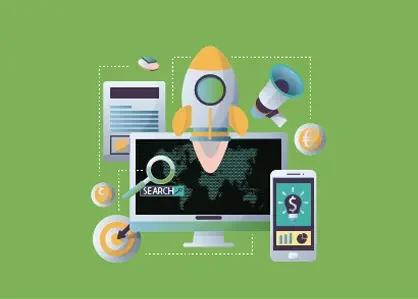
Most websites don’t struggle because of poor design. They battle because search engines don’t fully understand their content.
At Lince Digital Marketing, we specialize in AI-enhanced on-page SEO strategies designed to send clear, structured, and intent-driven signals to Google. The result is not just better rankings, but more qualified traffic that converts into real business outcomes.
This article breaks down the latest best practices for on-page SEO enhanced by artificial intelligence and explains how we implement them to help brands scale visibility sustainably.
What On-Page SEO Really Means Today
On-page SEO refers to everything you optimize within your website to improve search visibility and user experience. This includes content, structure, HTML elements, internal linking, and media optimization.
However, modern on-page SEO is no longer about checking boxes or repeating keywords.
Today, Google evaluates:
- Search intent alignment
- Content depth and topical authority
- Semantic relevance, not just exact-match keywords
- User engagement signals
- Page structure and clarity
AI allows us to optimize all these factors with precision, speed, and data-backed decisions.
Why Google Often Fails to Understand Content
Google does not “read” content the way humans do. It relies on signals, patterns, and context to determine what a page is about and whether it deserves to rank.
Most websites fail because:
- Their main topic is unclear or diluted
- Headings are poorly structured
- Keywords are either missing or overused
- Content does not match search intent
- Internal links do not reinforce topical relevance
AI-enhanced on-page SEO solves these issues by structuring content in a way that is both machine-readable and human-friendly.
The Role of AI in Modern On-Page SEO
Artificial intelligence does not replace strategy. It amplifies it.
At Lince Digital Marketing, we use AI to:
- Analyze real search intent behind keywords
- Identify semantic gaps in existing content
- Optimize headings, subheadings, and content hierarchy
- Improve readability without sacrificing depth
- Scale optimization across multiple pages consistently
AI allows us to move from assumptions to evidence-based optimization.
Keyword Optimization That Goes Beyond Exact Matches
Focus Keyphrase Placement
Every page starts with a clearly defined focus keyphrase. This keyphrase is strategically placed:
- At the beginning of the SEO title
- Naturally, within the meta description
- In the first 100–150 words of the content
- In at least one H2 or H3 subheading
This ensures immediate topical clarity for search engines.
Semantic Keywords and Context
Modern SEO requires more than repeating the same keyword.
We integrate:
- Semantically related terms
- Synonyms and variations
- Contextual phrases users actually search for
This approach helps Google understand the topic holistically while avoiding over-optimization penalties.
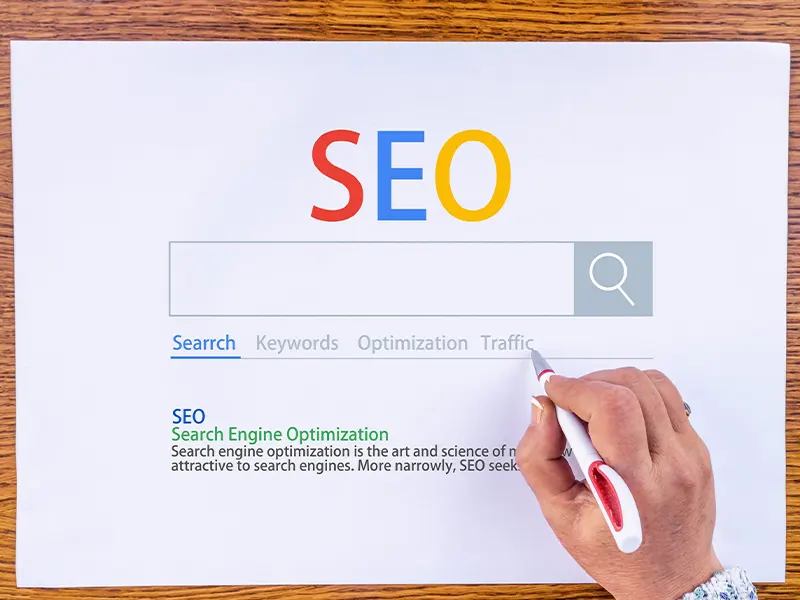
SEO Titles and Meta Descriptions That Drive Clicks
SEO Titles
The SEO title is one of the strongest on-page ranking signals.
Our AI-assisted process ensures that titles:
- Include the focus keyphrase
- Are concise and compelling
- Match the dominant search intent
- Are optimized for click-through rate, not just rankings
Meta Descriptions
While meta descriptions are not a direct ranking factor, they strongly influence user behavior.
We craft meta descriptions that:
- Clearly state the value of the page
- Reinforce relevance
- Stay within the optimal 120–160 character range
- Encourage clicks without clickbait
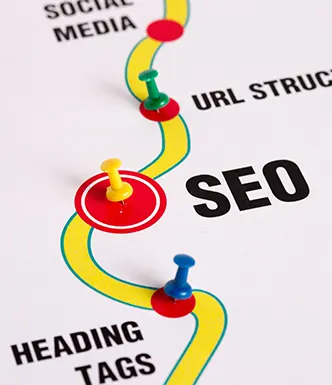
URL Structure and Technical Clarity
Clean URLs improve both SEO and usability.
Best practices we follow include:
- Short, descriptive URLs
- Inclusion of the primary keyword
- No unnecessary parameters or clutter
- Logical hierarchy that reflects site structure
Clear URLs help search engines and users understand where they are within your website.
Content Length, Depth, and Quality
There is no universal word count for SEO success.
However, data consistently shows that thin content underperforms.
Our standard approach:
- Minimum of 300 words for simple topics
- 800–1500+ words for competitive or complex topics
- Content depth that fully answers the user’s query
AI helps us evaluate content completeness and identify missing sections competitors already cover.
Internal Linking as a Growth Lever
Internal links are one of the most underutilized on-page SEO tools.
We use AI to map:
- Topic clusters
- Supporting content
- Logical internal link opportunities
Strategic internal linking:
- Distributes authority across your site
- Reinforces topical relevance
- Improves crawlability
- Increases time on site
Every internal link has a purpose.
External Links and Authority Signals
Linking out to authoritative, relevant sources strengthens content credibility.
We ensure:
- At least one high-quality outbound link where relevant
- Contextual placement within the content
- No spammy or irrelevant references
This supports trust and aligns with Google’s quality guidelines.
Image Optimization and Alt Text
Images are not decorative. They are SEO assets.
Our image optimization process includes:
- Descriptive file names
- Keyword-relevant alt text
- Compression for fast load times
- Contextual relevance to surrounding content
Optimized images improve accessibility, image search visibility, and overall page performance.
Readability as a Ranking Advantage
Google increasingly rewards content that users can easily consume
Paragraph Structure
We structure content with:
- Short paragraphs (1–3 sentences)
- Clear spacing
- Logical flow
Readability as a Ranking Advantage
We use H2, H3, and H4 tags to:
- Break content into scannable sections
- Guide readers through complex topics
- Reinforce keyword relevance naturally
Visual Formatting for Better Engagement
Well-formatted content performs better.
We strategically apply:
- Bullet points and numbered lists
- Bold text for key takeaways
- Italics for emphasis where appropriate
This improves scanability and keeps users engaged longer.
On-Page SEO Is Not a One-Time Task
Search behavior evolves. Competitors update content. Google’s algorithms adapt.
AI allows us to continuously:
- Monitor performance
- Refresh content
- Re-optimize based on new data
On-page SEO becomes a scalable system, not a static checklist.
How Lince Digital Marketing Approaches On-Page SEO
We don’t optimize pages in isolation.
Our process combines:
- Human strategy
- AI-driven insights
- Conversion-focused thinking
Every page is built to:
- Be understood by search engines
- Deliver value to users
- Support business goals
Rankings are not the objective. Revenue, authority, and scalability are.
Final Thoughts
When Google understands your content, visibility becomes predictable.
AI-enhanced on-page SEO is not about shortcuts. It is about clarity, structure, and intent executed at scale.
At Lince Digital Marketing, we help brands transform their websites into growth assets by making sure every page communicates the right message to both users and search engines.
If your website is not ranking, the issue is rarely effort. It is understanding.